Backroads
From the Backroads of Edon, OH
The Light We Carried Home
Chapter One: The House on County Road K
I live just off County Road 6 now, in a little house most people pass without noticing. County Road K is just around the corner.
If you asked me where, I would probably tell you “outside Blakeslee” and leave it at that. Folks from Williams County would understand. Out here, directions are not always given in miles. Sometimes they are given by whose barn used to stand at the corner, where the old schoolhouse was, or which family lived in a place before the road was paved.
But the house I still dream about was never mine.
It belonged to my grandparents on County Road K.
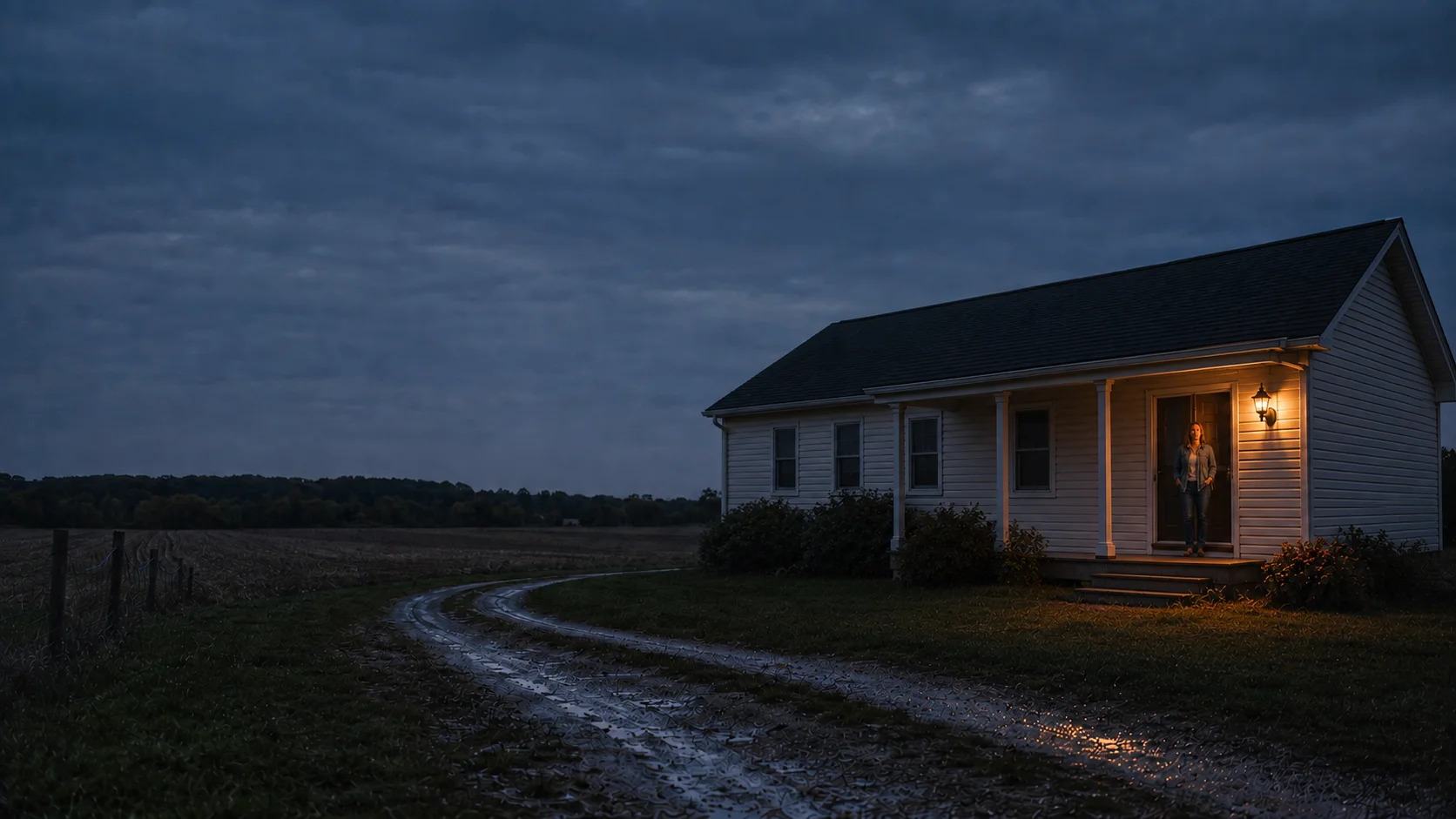
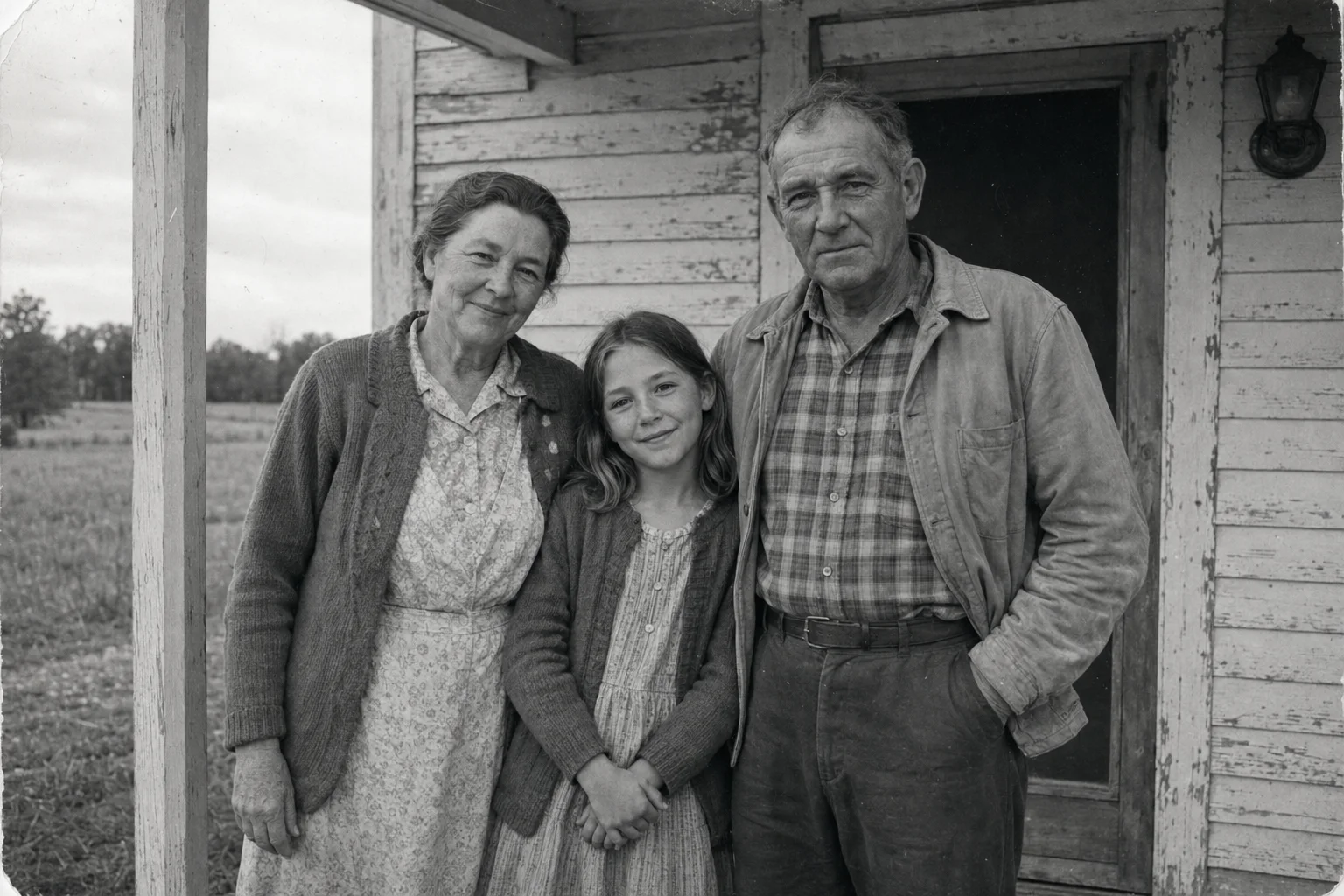
The farmhouse had been white once, although by the time I came along, the west side had weathered nearly gray. The kitchen floor leaned toward the back door. On still nights, we could hear a train working the tracks near the Edon Farmers Co-op, its horn carrying across the fields. In winter, Grandpa stuffed an old dish towel along the bottom of the kitchen door to keep the wind from finding its way inside.
And the porch light burned every night.
For most of my life, I thought Grandma left it on because she was forgetful.
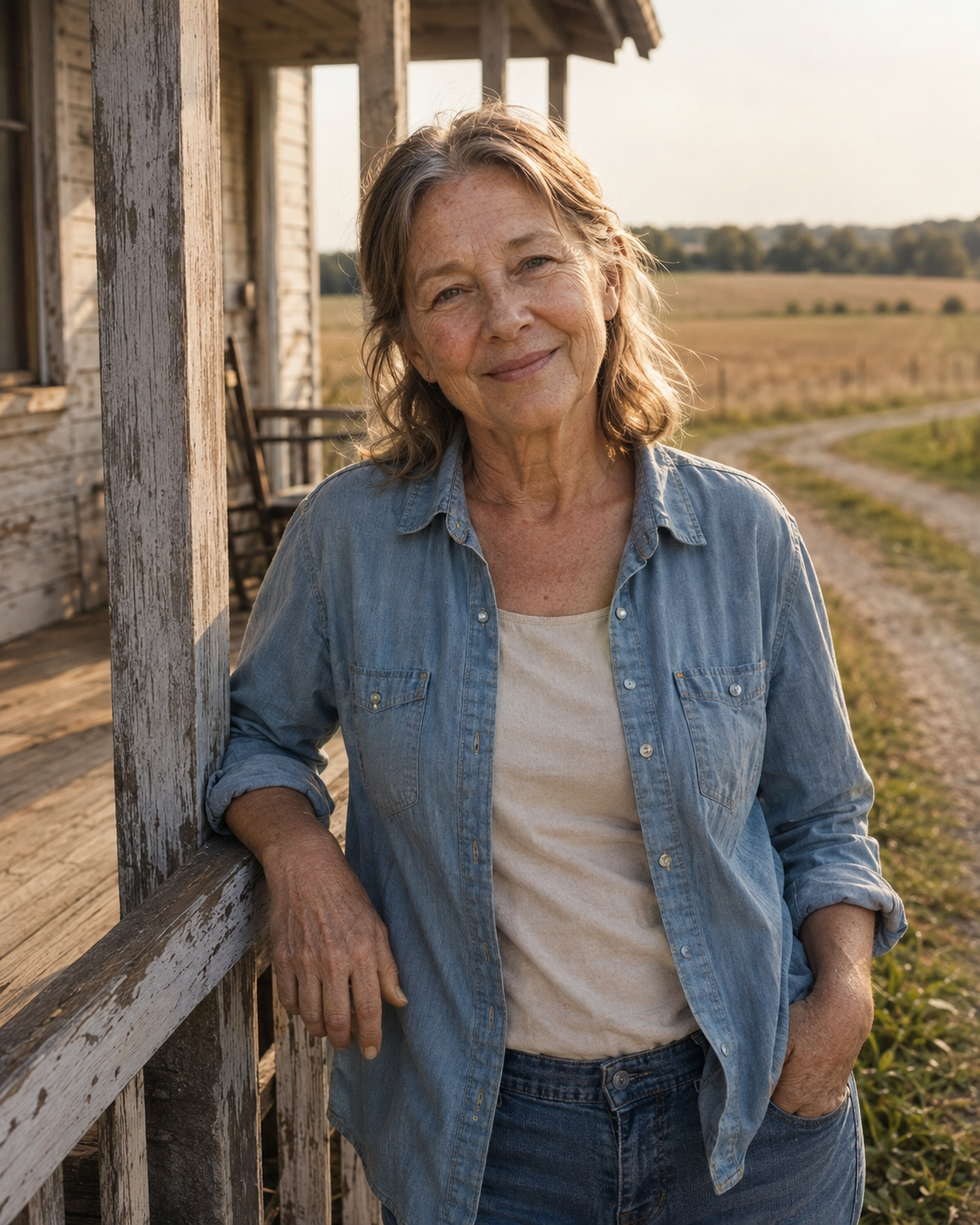
I am sixty-six years old now. I was fifty-nine before I learned she had never forgotten it once.
My name is Clara Hart, and I first came to that house when I was eight years old, carrying a red suitcase with a broken latch.
My mother told me I would be staying with Grandma and Grandpa “until things settled down.” Adults said that often in those days. Things were always going to settle down after the bills were caught up, after somebody found work, after somebody else stopped drinking, or after one last argument that was never really the last.
Grandma met us at the back door. She did not ask my mother questions in front of me. She took the suitcase from my hand, set it beside the washing machine, and said, “Your room is ready.”
Not a room.
Your room.
That one word saved more of me than I understood at the time.
My mother left before supper. I watched her taillights disappear down County Road K and told myself I was not going to cry. Grandpa came to stand beside me, smelling like sawdust and cold air.
“She knows the way back,” he said.
Then he reached past me and switched on the porch light.
Life at my grandparents’ house was not exciting, which was exactly what I needed. Breakfast happened at the same time every morning. Boots came off by the door. Grandpa listened to the weather as though the man on the radio were speaking directly to him. Grandma hung sheets outside whenever the sun showed itself, even when the cold left them stiff as boards.
Some summer afternoons she took me to George Bible Park. Back then, it seemed like we nearly always had the place to ourselves. Grandma packed sandwiches in wax paper and brought more food than two people could eat. I chased frogs at the edge of the pond while she sat at a picnic table with her hands folded in her lap, watching me as if there were nowhere else on earth she needed to be.
I did not appreciate quiet in those days. Children rarely do when they have been lucky enough to find it.
By seventeen, I wanted noise. I wanted bright places and people who did not know my family. My friends and I spent summer nights driving backroads with the windows down, wasting gasoline we could barely afford. Once, six of us crowded into an old Buick and drove all the way to Goll Woods because none of us wanted to go home yet. We talked big, laughed too loudly, and got lost twice. The destination did not matter. At that age, the point of driving was to feel as though you could keep going forever.
Grandpa was waiting on the porch when I finally came in.
“You know what time it is?” he asked.
“I know how to read a clock.”
It was a smart answer, and I regretted it before I finished saying it.
He looked at me for a long moment. Then he opened the screen door and stepped aside.
“Light was on,” he said. “Figured you’d find us.”
That was how my grandparents loved people. They did not chase. They did not demand explanations before offering supper. They simply made sure you could find the door.
I left Williams County the summer after graduation. I said I was going because I wanted a bigger life. That was partly true. The other truth was that I had begun to mistake being known for being trapped.
Years later, I came back and bought my little house just off County Road 6. The turn onto County Road K was right around the corner. I could reach my grandparents’ place in minutes.
You might think living that close meant I saw them all the time. I wish I could tell you it did. But sometimes the people nearest to us are the easiest to put off. We tell ourselves we can stop tomorrow because their house will still be there, their coffee will still be hot, and their light will still be on.
Grandma hugged me beside my packed car.
“You can come back before you fail,” she whispered.
I pulled away, embarrassed. “I’m not going to fail.”
“That isn’t what I said.”
I did not understand her then. I thought returning home was what people did after the world defeated them. It took me years to learn that sometimes coming home is how we stop defeating ourselves.
Grandpa died first. A heart attack in the equipment shed, quick enough that Grandma called it merciful and cruel in the same sentence.
I came back for the funeral. I stood beside Grandma while people I barely remembered filled the church and spoke about things Grandpa had done for them. A tire changed during freezing rain. A furnace coaxed through one more night. A calf pulled from a ditch. Twenty dollars slipped into a coat pocket and never mentioned again.
I stayed two days.
When I left, Grandma stood beneath the porch light, although it was not yet dark.
“Call when you get there,” she said.
I promised I would.
I forgot.
She lived another eleven years. At first, when I still lived away, I called on Sundays when I remembered and visited when weather, work, and my own excuses lined up correctly. Even after I moved back around the corner, I let ordinary life postpone visits that would have cost me almost nothing. Each time I did stop, the porch light followed me in the rearview mirror until the road turned.
Then one November morning, my phone rang before daylight.
Grandma had died in her sleep.
Three days later, I turned onto County Road K with the old red suitcase in my trunk. I had found it in the back of a closet that morning. I do not know why I brought it. The latch was still broken.
The farmhouse appeared beyond the bare trees, smaller than the one I carried in my memory.
And above the empty porch, in the blue hour before sunrise, the light was still burning.
Chapter Two: The Names in the Drawer
My plan was to empty the house in a week.
That is the sort of plan you make when you believe a lifetime can be separated into three piles: keep, donate, and throw away.
On the first day, I found Grandpa’s work gloves hanging from a nail in the mudroom. On the second, I discovered three jars of buttons Grandma had saved because, according to her, a person never knew when a good button might be needed. By the third day, I had stopped pretending I was accomplishing anything.
People came by without calling.
That happens in the country after someone dies. They brought casseroles, coffee, paper plates, and stories. Most of them said the same thing when I thanked them.
“Your grandma did it for us.”
A man named Raymond told me his truck had broken down near Blakeslee during a January storm. He had walked until he saw my grandparents’ porch light.
“Your grandpa got the truck running,” he said. “Your grandma made me stay for breakfast anyway.”
A woman I remembered only as Mrs. Mercer said Grandma once sat with her at the kitchen table until nearly morning after her husband left.
“She didn’t give advice,” Mrs. Mercer told me. “That was her gift. She let a person hear herself think.”
After everyone left, I sat alone at that same table. The house was so quiet that I could hear the refrigerator motor struggling in the corner.
I opened the drawer where Grandma had kept pencils, rubber bands, expired coupons, and every instruction manual for every appliance she had ever owned.
Beneath them was a black clothbound notebook.
The first pages were written in Grandma’s careful hand. Each entry contained a date, a name when she knew it, and a few plain words.
December 19, 1974 — Young mother and two children. Alternator quit. Stayed until morning.
February 3, 1986 — Raymond. Lost his wife last month. Did not need fixing. Just could not go home yet.
July 22, 1997 — Daniel and his boy. Argument got too big for their own house. Fed them pie. Sent them home together.
Some entries made me smile. Others made me close the book and look out the window until I could continue.
There were dozens of names.
People had come because of flat tires, flooded roads, empty gas tanks, lost dogs, sick children, bad marriages, and the terrible loneliness that can find a person even in a county where everyone seems to know everyone.
My grandparents had not solved all those lives. Most of the time, they had offered coffee, a telephone, a dry place to sit, or silence without judgment.
On the final written page, beneath the date October 6, 2019, Grandma had drawn a shaky line.
Under it she wrote:
Clara — if you are reading this, go back to the beginning.
I turned to the first page.
There, dated more than forty years earlier, was my own name.
June 4, 1968 — Clara came with one little red suitcase. Margaret says it is only until things settle down. We told Clara she could stay as long as she needs. Before supper, I already knew she was home.
I read it twice.
Then a third time.
All those years, I had thought the notebook was a record of strangers my grandparents had helped. I had not understood that I was the first lost traveler written inside it.
Tucked between the pages was an envelope with my name on it.
Inside was a single sheet of paper.
Dear Clara,
There are things a person should say while there is still time, but knowing that does not always make the words easier.
You once asked why we left the porch light on when we lived so far from town. Your grandpa used to say darkness is different in the country. In town, there is usually another light around the corner. Out here, one light may be the only one a person can see.
At first, we left it on for your mother. Then we left it on for you. After a while, we understood it did not belong to any one person.
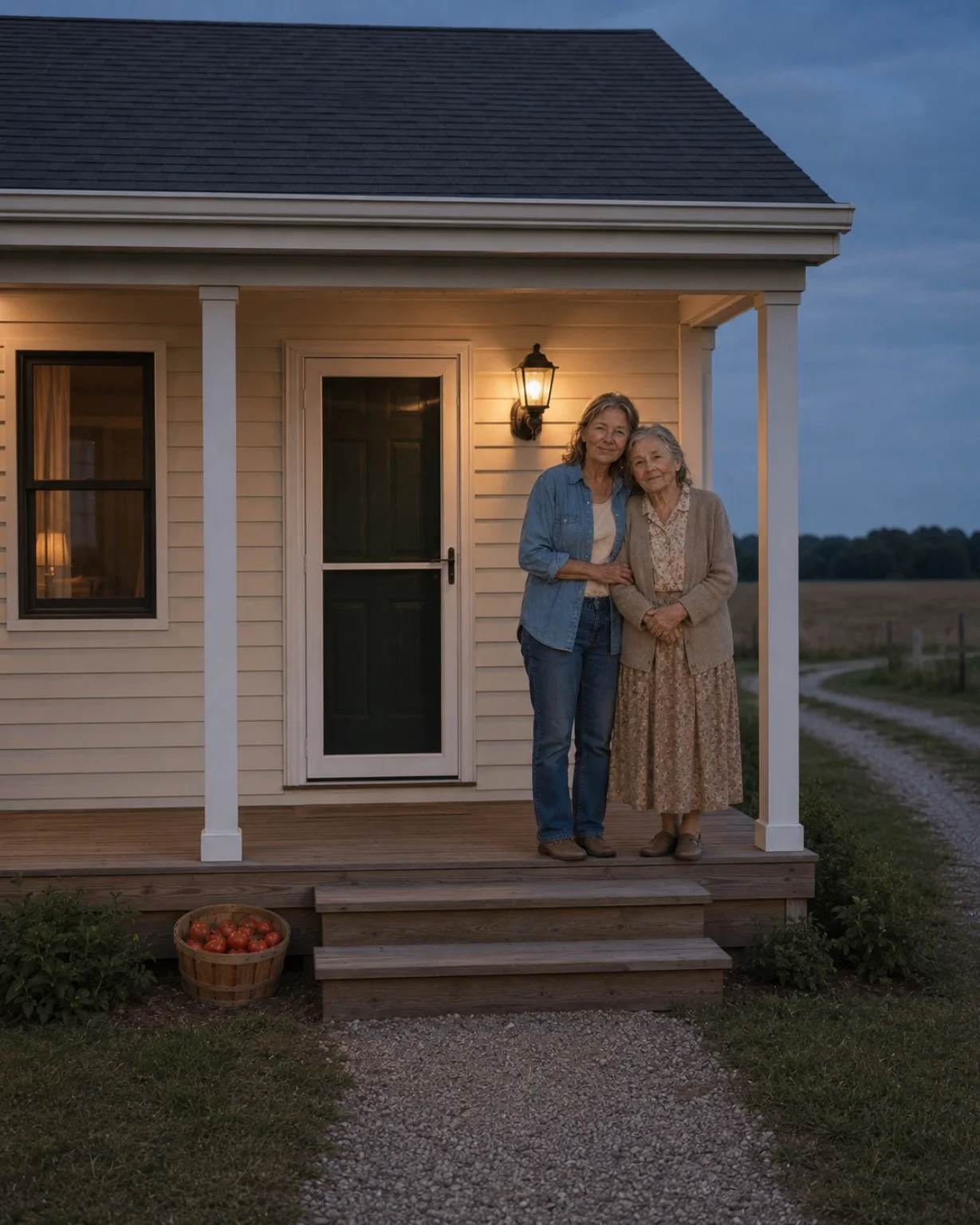
The light meant there was a place where you did not have to explain yourself before you came through the door.
I hope you have such a place, Clara. More than that, I hope someday you become one.
Love,
Grandma
I put the letter on the table and wept harder than I had at either funeral.
I cried for Grandpa, who had waited up without demanding apologies. I cried for Grandma, who had understood my leaving better than I had. I cried for my mother, who had not known how to give me a steady home but had known enough to bring me to one.
Mostly, I cried for the woman I had become—a woman who had spent decades making certain she never needed anybody and calling that independence.
That night, I slept in my old room.
A west wind rattled the windows. Sometime after midnight, I woke and looked through the curtains. The yard was silver with frost. Beyond it, County Road K disappeared into darkness in both directions.
The porch light made only a small circle on the ground.
It could not illuminate the whole road.
It did not need to.
It only had to show where the door was.
Chapter Three: Just Off County Road 6
I sold the farmhouse in the spring.
For a while, I believed keeping it was the only proper ending to this story. I imagined repairing the windows, repainting the weathered siding, and sitting at Grandma’s table while the seasons moved across the fields.
But love and lumber are not the same thing. A roof does not stop leaking because you attach a memory to it. The house needed a young family, or at least someone whose knees did not object to the stairs.
A couple with two little girls bought it. The younger one chose my old bedroom before they had finished walking through the upstairs.
At the closing, her mother promised they would take good care of the place.
“It took good care of me,” I said.
Before turning over the keys, I removed one thing from the porch.
The light fixture was not valuable. It was a plain metal fixture with cloudy glass and two coats of peeling black paint. The new owners had already chosen something brighter.
I brought it home to my little house just off County Road 6. The drive from the farmhouse took only a few minutes. That surprised me. In my memory, the distance between my grandparents’ home and the life I had made for myself had always seemed much greater.
For three months, it sat in a box on my kitchen floor.
Every time I passed it, I heard Grandma’s words: I hope someday you become one.
I told myself I did not know what she expected me to do. People did not knock on strangers’ doors the way they once had. Everyone carried a phone. Roads were better traveled. Help could be summoned without walking toward a farmhouse light.
Those things were true.
They were also excuses.
One Saturday, Raymond came over with a ladder and installed the fixture above my front door. He refused the money I offered him.
“Your grandpa never charged me,” he said.
The first night I switched it on, the glow was softer than I remembered. It barely reached the front steps.
Still, I left it burning.
Weeks passed. Nobody appeared needing shelter. No stranded driver walked up my lane. The world did not provide me with a grand opportunity to become the woman my grandmother hoped I would be.
Instead, it sent smaller ones.
A neighbor recovering from surgery needed groceries. A woman from work needed somebody to sit beside her during a difficult appointment. My mother, older and finally sober, called one Sunday and asked whether I might come see her.
For several minutes, I could not answer.
There are hurts we carry so long that setting them down can feel like betraying the person we were when we picked them up.
“Clara?” she said.
Her voice sounded frightened. Not the frightening mother I remembered from childhood. Just frightened.
“I’m here,” I told her.
We began with coffee.
That was all.
No speeches. No pretending the past had not happened. I made coffee, and my mother sat at my kitchen table beneath the window while late-afternoon traffic moved along County Road 6.
Before she left, she noticed Grandma’s notebook on the counter.
“She wrote everything down,” my mother said.
“Not everything.”
My mother looked toward the door. “Did she write about the night I brought you there?”
I nodded.
Her face folded in a way I had never seen. “I thought you would hate me for leaving you.”
“For a while, I did.”
She accepted that without defending herself.
“I did not leave you because I didn’t love you,” she said. “I left you there because I did.”
It was not enough to repair forty years.
But it was enough to open the door.
We started with coffee on Sundays.
Then one Sunday became two days because the weather turned bad. Later, she stayed for a week after a spell of dizziness frightened us both. Somewhere along the way, the overnight bag beside my washing machine stopped being packed.
Last spring, my mother stood in the hallway and asked whether she could stay with me while she figured out what came next.
For just a second, I was eight years old again, holding a red suitcase while adults talked about things settling down.
Then I heard Grandma’s voice coming out of my own mouth.
“Your room is ready,” I said.
My mother lives with me now.
She is happy in a quiet way I never knew when I was young. She grows tomatoes behind the house, complains that I make the coffee too strong, and sometimes hums while she washes dishes. We have not repaired every broken thing between us. I no longer believe people have to be perfectly mended before they are allowed to belong.
My mother did eventually find the light. It took her most of a lifetime—and it took me nearly as long to understand that opening the door for her did not erase the little girl she had once left behind. It simply meant that little girl had grown into someone who could leave the light on.
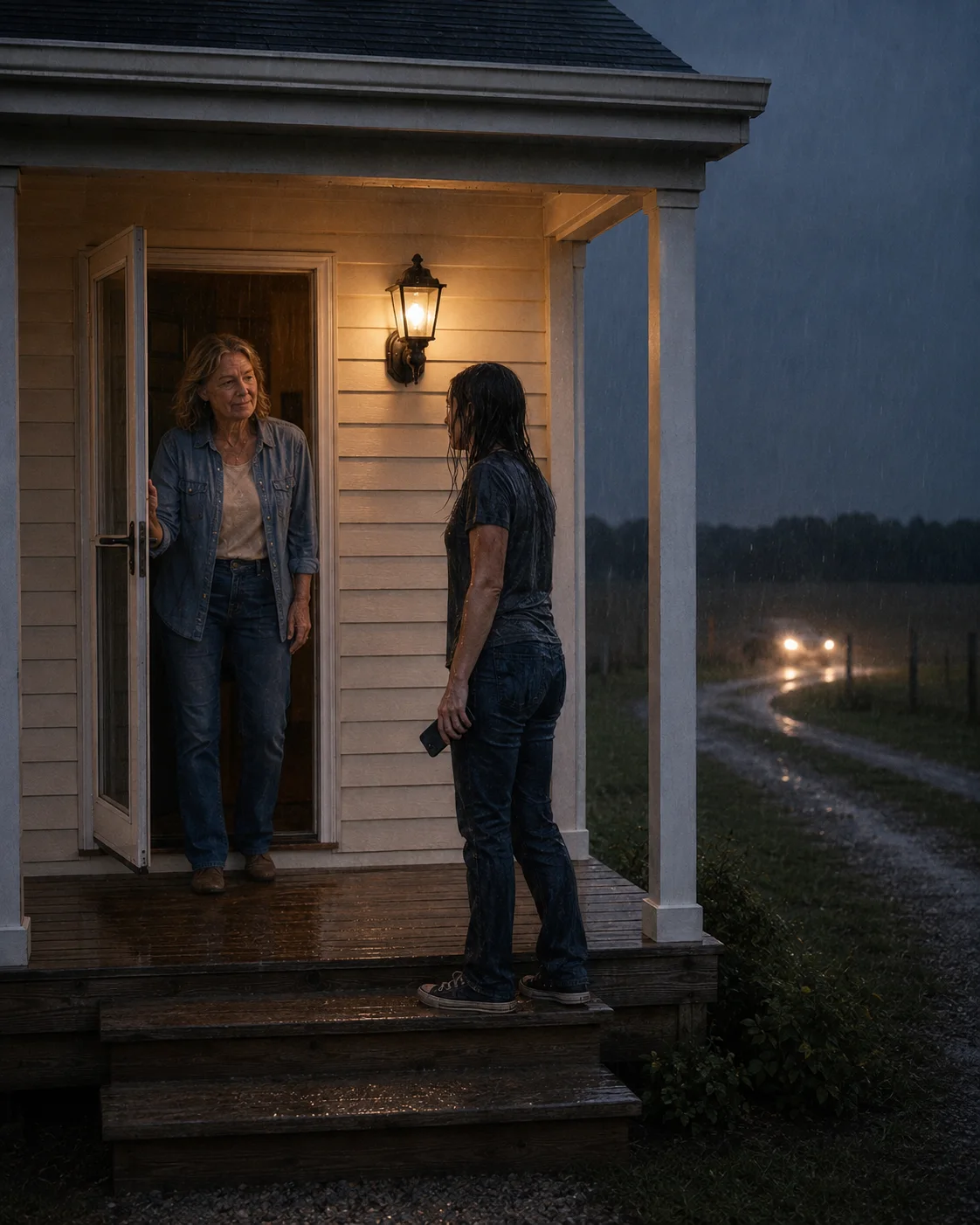
Not long after my mother moved in, a storm rolled across Williams County. Rain struck the windows sideways, and the power blinked twice before holding steady.
Around ten, headlights slowed near my driveway. A car pulled onto the shoulder with its hazard lights flashing.
I watched from the window as a young woman stepped into the rain. She carried no coat. By the time she reached my porch, her hair was soaked against her face.
I opened the door before she knocked.
“My phone is dead,” she said. “And I think something is wrong with my car.”
Then, almost as an apology, she added, “I saw your light.”
I stepped aside.
“Come in,” I said. “You can explain after you get dry.”
While she called her father from my kitchen, I made coffee neither of us needed at that hour. I found a clean towel and put bread in the toaster because feeding people was the only useful thing I could think to do.
She was twenty, maybe twenty-one. When her father arrived, he thanked me three times. She hugged me before leaving, surprising us both.
After their taillights disappeared, I stood alone on the porch.
The rain had softened. Somewhere beyond the fields, a train sounded from the direction of the Edon Farmers Co-op. For a moment, I was eight years old again, watching my mother drive away. Then I was seventeen, returning too late in somebody else’s Buick. Then fifty-seven, turning onto County Road K and seeing one light burning above an empty porch.
I used to believe home was a place you either stayed or abandoned.
My grandparents knew better.
Home can be a kitchen where no explanation is required. It can be coffee between two people who are not ready to forgive but are tired of being strangers. It can be one small light at the edge of a dark road.
The farmhouse on County Road K belongs to another family now. It is still just around the corner, part of the small circle of roads that makes up my everyday life. I pass it on my way into town, sometimes slowly enough to see that the west side has been painted white again. There are bicycles in the yard and chalk drawings on the walk. The new porch light is brighter than the old one.
I am glad for that.
Some people leave you land. Some leave money, dishes, photographs, or a name you spend your life trying to honor.
The strange thing is, I hardly noticed that porch light when I was young. Maybe the best lights are like that. They do their work so quietly that we understand what they gave us only after we have lived long enough to find ourselves in the dark.
My grandparents left me a light.
It burns above my door just off County Road 6—not because I am waiting for one particular person and not because I believe I can brighten every road.
I leave it on because somebody may still be out there, traveling in the dark, wondering whether they waited too long to turn toward home.
And because of two people who loved me before I knew how much I needed it, I can finally say what they spent their lives teaching me:
If you can see the light, it is not too late.
The door is still here.
Private Keepsake
Keep This Backroad
Tuck this story away for later. What you save and how you organize it stays private to you.
Trail Marks
Leave a Trail Mark
If this Backroad stayed with you, leave a small sign along the way. Trail Mark totals stay simple and private: BackroadLove does not list who left them here, and these counts do not control story discovery ranking.
Sign in to leave a Trail Mark.
Notes Along the Way
Leave a Note Along the Way
A Backroad can spark a memory, a question, or another point of view. Keep the conversation neighborly and tied to the story.
Sign in to leave a note or reply.